
Locksmith Overcharged You? What to Do Next in Farmington, NM
Yes — you have real options. If a locksmith billed you far more than the phone quote, work through these steps in order: save your evidence, contact the business and ask for the difference in writing, file a written billing dispute with your card issuer within 60 days, and report the company to the Consumer Protection Bureau. Under the state’s Unfair Practices Act, an overcharged consumer can recover at least $100 — and up to three times actual damages for willful overcharging.
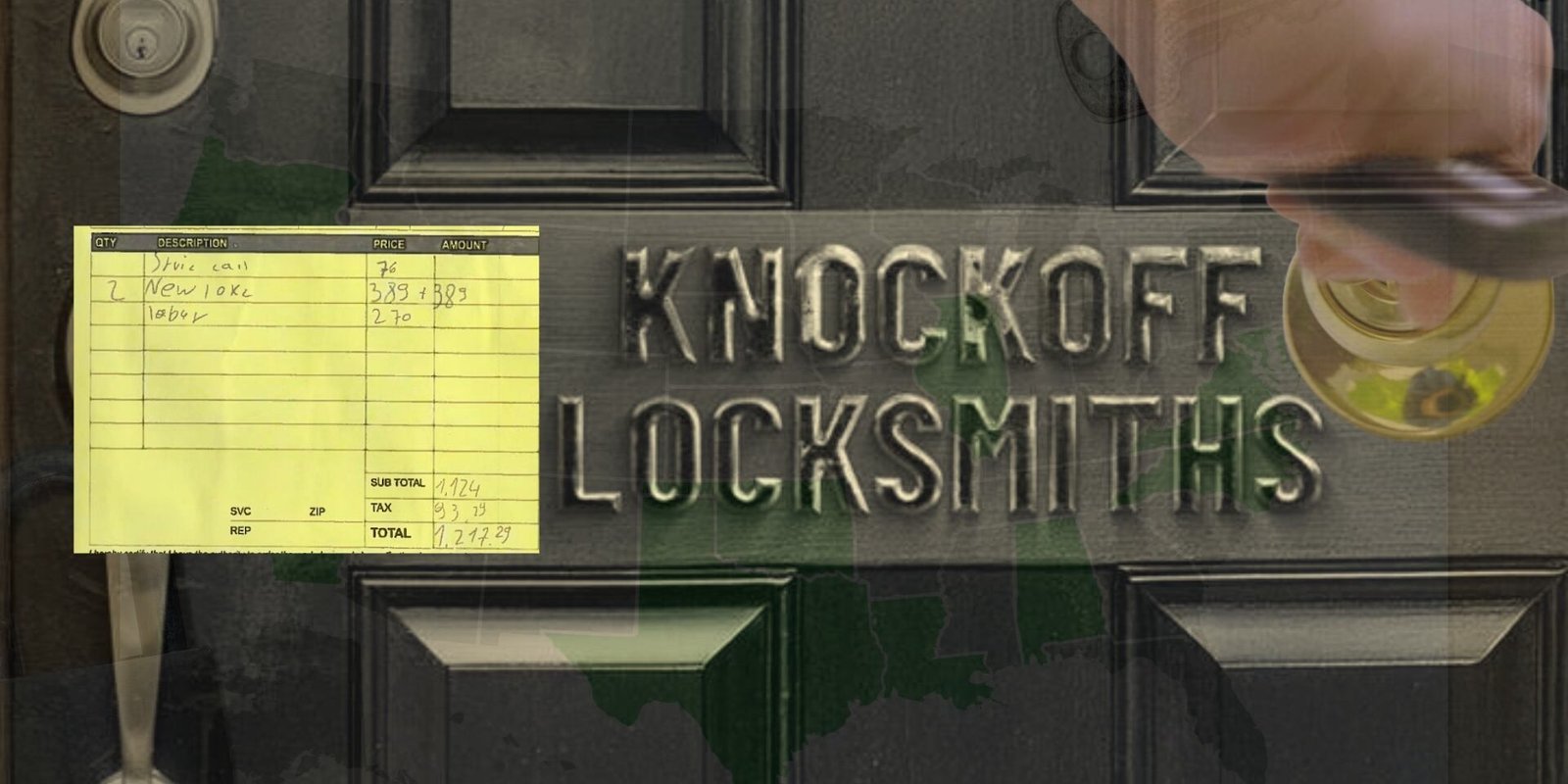
If a locksmith overcharged you and you’re staring at a shocking invoice in Farmington, you’re in the right place. It usually starts with a small number. You search for a locksmith late at night, someone quotes $29 or $39 over the phone, and the invoice at your door reads $350 or more. That gap between the phone quote and the invoice is the core of bait-and-switch pricing — and it works best exactly when you are least able to think straight: in a panic, with groceries in the car or someone waiting inside. Here is what to do after it happens.
Better still, learn the locksmith scam red flags so the next call never turns into a bill like this.
Step 1 — Stop and Save Everything
Before you argue with anyone, build your paper trail. Pull together the invoice or receipt, your texts and call log showing the number you dialed, photos of the ad or listing you called, the technician’s vehicle, and any paperwork handed to you. Then write down the exact quoted price and who gave it to you, while it is still fresh.
One detail matters most: a receipt with no business name on it. Victims with anonymous receipts often could not trace the company afterward — and without a traceable business, both chargebacks and complaints stall. If yours shows no name, address, or phone number, write down everything else you remember right now, and screenshot the original ad before it disappears.
Step 2 — Call the Business First
With the quote and evidence in hand, call the business while you are calm. State the original quoted price, ask for an itemized explanation of the difference, and give them a chance to correct it. Many disputes end here — sometimes a technician added charges the office will reverse once you point at the quote.
Watch what a legitimate business does in this moment: it answers with its business name, takes the complaint seriously, and either honors the original price or explains the gap in writing. Evasion or a sudden claim that the quote “didn’t include labor” are signs of an operation that does this routinely. Note the date, time, and name of everyone you speak with.
Step 3 — Dispute the Charge With Your Card Issuer
If the business won’t fix it, your card issuer is your next lever. Under the Fair Credit Billing Act, you can dispute a charge in writing within 60 days of the statement date on which it appeared — and the letter goes to the card issuer’s billing-disputes address, not the address where you mail payments. While the dispute is investigated, you may withhold the disputed amount.
Here is the honest limit, stated plainly: if you agreed to the final price at the door and signed for it, a chargeback usually fails, because the issuer sees a transaction you authorized. Disputes win when the evidence tells a different story — a quoted price against a charged price, texts confirming the lower number, or a mismatched receipt.
Step 4 — Report It in New Mexico
Reporting creates an official record that strengthens your dispute, and helps regulators spot repeat offenders working across San Juan County and the state.
- File with the New Mexico Department of Justice, Consumer Protection Bureau — online at nmdoj.gov/get-help/submit-a-complaint/ or by phone at (505) 490-4060.
- File with the Better Business Bureau at bbb.org/file-a-complaint, and log the details in the BBB Scam Tracker.
- Report to the Federal Trade Commission at ReportFraud.ftc.gov or 1-877-382-4357.
If there was pressure or threats at your door — someone refusing to leave until you paid — file a report with Farmington police on the non-emergency line too.
Step 5 — Know Your New Mexico Rights
New Mexico’s Unfair Practices Act (NMSA 57-12) covers exactly this conduct. In plain words: false or misleading statements about price are unlawful, and the law also reaches “unconscionable” trade practices — including taking advantage of a person’s situation, and a gross gap between the price paid and the value received. A $39 quote that becomes a $400 invoice for a five-minute emergency lockout is the textbook example.
The private remedy is consumer-friendly. Someone who suffered a loss can recover actual damages or $100, whichever is greater. If the conduct was willful, a court may award up to three times actual damages or $300, whichever is greater — plus attorney fees and costs for a consumer who wins. For smaller amounts, magistrate court handles claims up to $10,000. One caution: this is general information, not legal advice — for large amounts, talk to a New Mexico consumer attorney first.
What Should It Have Cost?
Knowing the fair range is what makes your “locksmith overcharged what to do” dispute credible. Below are national fair ranges first — labeled as 2026 Angi, HomeAdvisor, and Thumbtack cost data — followed by the rates Farmington Locksmith publishes on this site.
| National fair ranges (2026 Angi / HomeAdvisor / Thumbtack data) | |
|---|---|
| House lockout, daytime | $75–$200 |
| House lockout, after-hours | $150–$250 |
| Car lockout | $117–$259 |
| Rekeying | $50–$150 per lock |
| Farmington Locksmith’s published rates (from this site) | |
| Home and business lockout | $75–$225 |
| Car lockout, standard hours | $65–$120 |
| Rekeying | $80–$130 per lock |
The price you agree on the phone is the price you pay when the work is done. That is what transparent pricing looks like: a firm number confirmed before dispatch, no vague “starting at” language that balloons on arrival, and an itemized invoice with the business name on it that matches the quote.
Why This Keeps Happening in New Mexico
New Mexico has no state locksmith license. A licensing bill died in the legislature in 2012, so anyone can buy ads calling themselves a locksmith — there is no license to check and no state registry. National call centers exploit that gap by buying local-looking ads and dispatching whoever is available, sometimes from far outside Farmington and San Juan County.
The Federal Trade Commission has warned since 2008 that some locksmith ads that look local are not local at all. The pattern: a call center takes your call, quotes a low number to win the job, and the person who shows up works on commission with every incentive to inflate the bill. With no license to verify, verify the business instead — a real local locksmith answers the phone with the business name, has a real local address, gives a firm price before work starts, and hands you an invoice with the business name printed on it. If any of those are missing, call someone else — our urgent lockout service page shows what upfront pricing should look like.
Frequently Asked Questions: Locksmith Overcharged — What to Do
Can you dispute a locksmith charge?
Yes. Under the Fair Credit Billing Act you can file a written billing dispute with your card issuer within 60 days of the statement date. Disputes are strongest when you can show a quoted price against a higher charged price.
What should I do if I was scammed by a locksmith?
Save your evidence, ask the business for a correction, dispute the charge with your card issuer, and report the company to New Mexico’s Consumer Protection Bureau, the Better Business Bureau, and the FTC.
Why do locksmiths charge so much money?
Sometimes the price is legitimate — after-hours dispatch and mobile service cost money. But a bill that multiplies the phone quote several times over is bait-and-switch. Our rekey cost guide shows what fair pricing looks like for one common job.
How do I know if a locksmith is legitimate?
A legitimate locksmith answers the phone with the business name, has a verifiable local address, quotes a firm price before work starts, and provides an itemized invoice with the business name on it. If you are locked out of a vehicle, our car lockout guide also walks through what a standard vehicle opening should involve.
How much is the average locksmith charge?
Nationally in 2026: house lockout $75–$200 daytime ($150–$250 after hours), car lockout $117–$259. Farmington Locksmith publishes $75–$225 for home and business lockouts and $65–$120 for car lockouts.
Locked Out — or Want a Locksmith You Can Check First?
Farmington Locksmith, 203 W Main St, Farmington, NM 87401. Firm price on the phone, same price on the invoice.
Call (505) 542-7424