
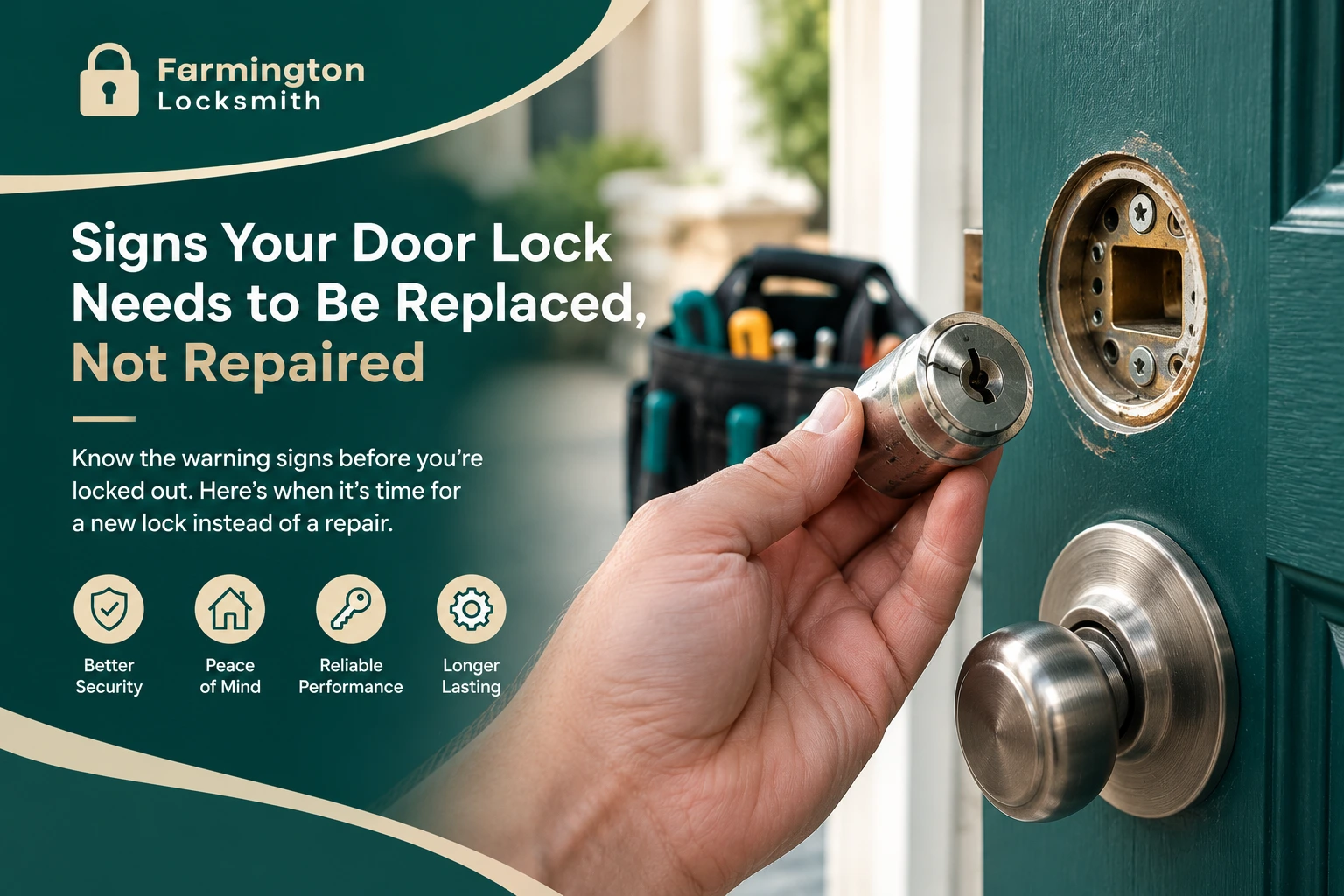
Signs Your Door Lock Needs to Be Replaced, Not Repaired
The clearest signs your door lock needs to be replaced are a worn or damaged cylinder, cracked housing, or a lock too outdated for the security you want. A lock usually needs repair instead when the problem is smaller — a sticky bolt, a loose strike plate, or a key that’s hard to turn — and those issues can often be fixed without new hardware. If the key still works fine and the only concern is who else has a copy, that’s neither of these, it’s a case for rekeying instead.
Most homeowners don’t think about their locks until one stops working right when they need it most. A little attention now can save you from exactly that kind of morning.
Physical Signs Your Door Lock Needs to Be Replaced
Metal that’s pitted, discolored, or flaking on the cylinder or bolt is a sign the internals are likely just as worn, even if it still technically opens.
A knob or deadbolt that wiggles in its housing has usually loosened at a point that tightening alone won’t fully fix.
If a key that used to slide in smoothly now catches or needs wiggling, the pins inside have worn down from years of use.
Any visible crack in the lock body itself is a structural problem, not something a technician can repair from the inside.
Functional Problems Worth Watching
Some issues aren’t visible from the outside but show up every time you use the door:
- The key turns but the bolt doesn’t fully extend or retract
- You need to lift, push, or jiggle the door while turning the key
- The lock occasionally jams and needs a second attempt
- The deadbolt doesn’t align with the strike plate anymore, even after adjustment
A single occurrence might just mean the door has settled or the strike plate needs adjusting. A pattern that keeps happening, especially after a repair attempt, usually points to a cylinder that’s reached the end of its life.
Security Reasons to Replace Rather Than Repair
Not every reason to replace a lock is about it breaking. Some are about what the lock can no longer do for you:
- The lock is a basic pin-tumbler style with no upgraded security features, and you want something more resistant to bumping or picking
- There’s visible evidence of a forced or attempted break-in around the lock or door frame
- You want to switch to a smart lock or keyless entry system
- The lock is old enough that matching replacement parts are hard to source
If none of that applies and the only issue is that a former tenant, contractor, or ex-roommate still has a key, replacement is overkill. That’s a rekeying job, and it’s worth understanding what rekeying actually costs before assuming a full replacement is necessary.
What Happens If You Ignore the Warning Signs
A lock that’s already showing physical or functional problems tends to get worse gradually, then fail all at once. That failure rarely happens at a convenient time. If a worn lock finally gives out while you’re standing outside with your hands full, that’s an urgent lockout service call — don’t force the door, since forcing a failed lock usually damages the door as well as the hardware.
What a Locksmith Actually Checks
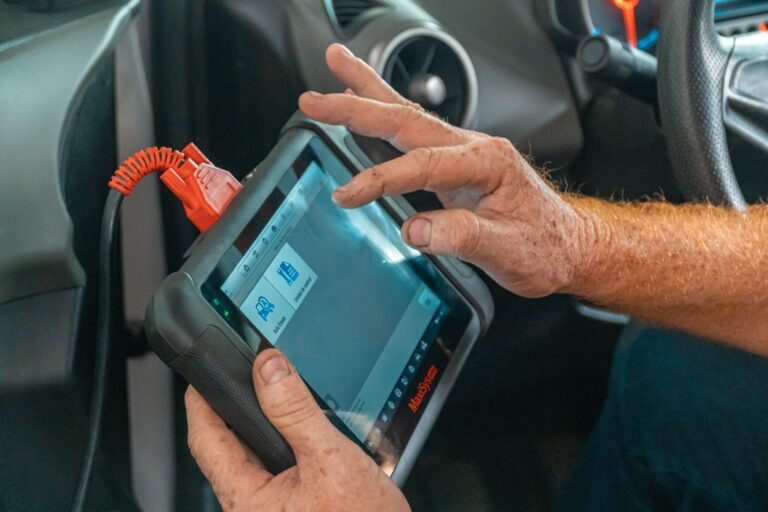
A quick inspection usually covers the cylinder condition, how smoothly the key turns, whether the bolt throws fully and aligns with the strike plate, and whether the housing itself shows cracks or corrosion. This is often enough to tell within a few minutes whether a repair will hold or whether replacement is the more honest recommendation. Our lock repair and rekey technicians make that call on site rather than defaulting to the more expensive option.
Choosing a Replacement Lock
If replacement is the right move, it’s also a good time to think about what you’re upgrading to, a higher security-grade deadbolt, a smart lock, or simply matching hardware across every exterior door so they all take the same key. Our residential locksmith services cover installation for all of these, and a technician can walk through the options for your specific doors during the same visit.
Frequently Asked Questions
Can a locksmith tell me if my lock needs repair or replacement?
Yes. A quick on-site inspection of the cylinder, bolt alignment, and housing condition is usually enough to make that call within a few minutes.
Is it cheaper to repair a lock than replace it?
Usually, yes, if the issue is something like a misaligned strike plate or a minor adjustment. Once the cylinder itself is worn or damaged, repair often costs nearly as much as replacement without solving the underlying problem.
How long do residential door locks typically last?
It varies with usage and exposure to weather, but a lock showing rust, looseness, or a worn keyway has likely already outlived its comfortable working life, regardless of its exact age.
Should I replace all my locks at once or just the worn one?
You can replace just the one that’s failing, but if you’re already having a technician out, it’s often worth keying new hardware to match your other doors so you’re not juggling separate keys.
Is a sticking lock always a sign it needs to be replaced?
Not always. Sometimes it’s dirt or lack of lubrication rather than wear. A locksmith can usually tell the difference quickly, so it’s worth having it looked at before assuming the worst.
Not Sure Which One You Need?
A quick inspection settles it. Mobile service across Farmington and the surrounding area, available 24 hours a day.
Call (505) 542-7424